
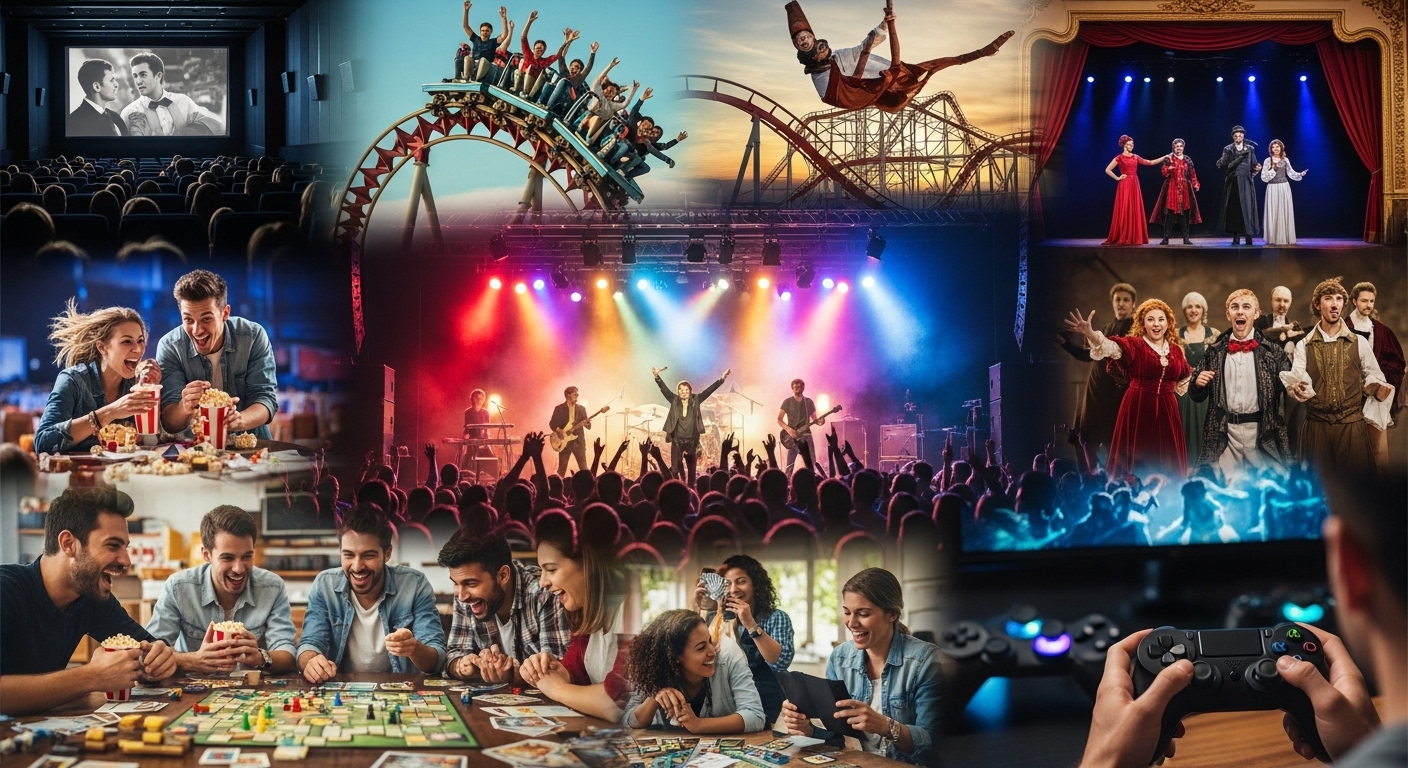
Entertainment is a cornerstone of human culture, constantly evolving to reflect the changing dynamics of society, technology, and creativity. From the simple joys of storytelling to the immersive experiences of today, entertainment has always provided an essential escape, a source of inspiration, and a way for people to connect. Over the years, the way we consume and interact with entertainment has undergone dramatic transformations. This blog post will explore the evolution of entertainment, from its roots to its modern-day incarnation, and consider what the future might hold.
The Origins of Entertainment: Simple Pleasures and Shared Stories
In the earliest days of humanity, entertainment was largely communal and simple, rooted in oral traditions. Storytelling, music, and dance were the primary forms of entertainment, often used as a way to pass down knowledge, traditions, and cultural heritage. These early forms of entertainment weren’t just about leisure; they played an important role in community-building, education, and ritual. Around a fire or within the walls of a temple, people would gather to share stories, recounting myths, legends, and histories that helped form their collective identity.
As human societies evolved, so did entertainment. With the rise of written language, entertainment took on more formalized structures. Ancient civilizations like the Egyptians, Greeks, and Romans began to incorporate theatrical performances, poetry, and music into their daily lives. These performances were not only meant to entertain but often conveyed moral lessons or helped reinforce social hierarchies and values.
The Rise of Cinema: A New Era of Visual Storytelling
The 20th century marked a significant turning point in the world of entertainment. The invention of cinema revolutionized the way stories were told. Early films were silent and often relied on exaggerated expressions and gestures to convey emotions. However, as the technology advanced, the introduction of sound in the late 1920s brought films to life in a way that had never been seen before.
The 1930s and 1940s are often considered the golden age of cinema. Hollywood became a hub of creativity, producing films that would go on to shape the cultural landscape for decades. Icons like Humphrey Bogart, Greta Garbo, and Clark Gable became household names, and the silver screen offered a form of escapism that audiences eagerly embraced. People would pack theatres to watch their favorite films, experiencing stories that were often grand in scale and filled with glamour, romance, and drama.
Television soon emerged as the next dominant form of entertainment, offering households access to a variety of shows, from dramas and comedies to news and documentaries. TV quickly became a central part of family life, with families gathering around the TV set for their nightly dose of entertainment. While cinema remained an important cultural force, television began to reshape the entertainment industry by making content more accessible and affordable.
Digital Revolution: The Shift to On-Demand Entertainment
The advent of the internet and digital technologies marked the beginning of a new era for entertainment. The ability to stream content, access music online, and watch movies and shows at any time completely disrupted traditional media consumption. Streaming platforms such as Netflix, Spotify, and YouTube have democratized access to entertainment, offering content on demand and allowing people to choose what they watch, when they watch it, and where they watch it.
This shift in how we consume media has not only changed our viewing habits but also impacted the entire entertainment industry. Traditional television networks and cable providers saw their dominance waning, while streaming services grew exponentially. The rise of binge-watching, where entire seasons of TV shows are consumed in a single sitting, has become a defining characteristic of the modern entertainment landscape.
Streaming platforms also gave birth to a new wave of content creators. Platforms like YouTube and Instagram allowed individuals to create and share their own content, giving rise to influencers, vloggers, and amateur filmmakers. These platforms have created an entirely new economy, where anyone with a camera and an internet connection can potentially reach millions of people and turn their passion into a profession.
Gaming and Virtual Reality: Immersion in New Worlds
Gaming has become a cornerstone of modern entertainment, with the video game industry growing into one of the largest and most lucrative sectors in the world. Video games have evolved from simple pixelated challenges into fully immersive worlds that offer complex storylines, multiplayer experiences, and interactive environments. Gaming has transcended its origins as a hobby for niche audiences and become a mainstream form of entertainment that appeals to all demographics.
Esports, competitive video gaming, has emerged as a global phenomenon, with professional leagues, tournaments, and a massive online following. Streaming platforms like Twitch allow gamers to broadcast their gameplay to a global audience, further blurring the lines between the creators and the viewers. This new form of entertainment has even led to the rise of gaming celebrities who enjoy the same level of fame as traditional sports athletes or movie stars.
The future of entertainment is likely to see the continued rise of virtual reality (VR) and augmented reality (AR), technologies that promise to create entirely new ways of experiencing stories and games. VR allows users to step into a fully immersive world, while AR enhances the real world with digital overlays. In gaming, this could mean stepping into a virtual universe where players can interact with environments and characters in real-time. VR concerts, virtual travel experiences, and interactive movies are also on the horizon, changing how we experience entertainment in ways we are just beginning to understand.
The Future of Entertainment: Infinite Possibilities
As technology continues to advance, the future of entertainment seems limitless. From artificial intelligence to holograms, the next generation of entertainment promises to be more immersive, interactive, and personalized than ever before. AI-generated content is already making waves, with algorithms creating music, artwork, and even entire films. This could lead to a future where entertainment is customized to each individual’s tastes and preferences, resulting in a hyper-personalized experience.
Another exciting development is the rise of immersive, multi-sensory experiences. We are likely to see the fusion of entertainment with other technologies, such as scent, touch, and even taste, to create fully immersive environments. Imagine attending a virtual concert where you can feel the vibrations of the music, smell the scent of the crowd, and taste a specially designed snack—these experiences are just around the corner.
As we look ahead, it’s clear that entertainment will continue to evolve, fueled by technological advancements and the creativity of those who shape it. What’s certain is that the way we engage with entertainment will only grow richer, more interactive, and more personalized. With endless possibilities on the horizon, the future of entertainment holds more surprises than we can even imagine.
Conclusion: A New Era of Entertainment Awaits
From the humble beginnings of storytelling around a fire to the virtual realities of tomorrow, entertainment has come a long way. As technology continues to transform our world, the entertainment industry will continue to evolve, offering new ways to engage, escape, and explore. What started as a means to entertain has now become a dynamic, ever-changing world that is both a reflection of and a response to the human experience. The journey from classic forms of entertainment to the cutting-edge innovations of the future is one that will continue to inspire and captivate audiences for generations to come.