
Entertainment is one of the most powerful forces in human culture. It transcends borders, languages, and generations. Whether it’s the movies we watch, the songs we hum, or the shows we binge after a long day, entertainment connects us in ways few other things can. It’s not just about fun or distraction—it’s a mirror reflecting who we are, what we value, and how we dream.
The Human Need for Escape and Connection
From the earliest days of civilization, people have turned to storytelling for comfort and connection. In ancient times, stories were told around campfires, not for profit or fame, but for survival. Through tales of heroes, gods, and moral lessons, people found meaning in a chaotic world. Fast forward to today, and that same instinct still drives our entertainment habits. The difference is the scale. What once was shared among a few around a fire is now broadcast to billions through streaming platforms, music apps, and social media. Yet, at its core, it’s still the same: humans craving to feel something together.
Entertainment offers both escape and empathy. When we watch a movie, read a book, or listen to a song, we momentarily step outside ourselves. We inhabit someone else’s world, feel their struggles, their joys, and their heartbreaks. This emotional connection is what keeps us coming back—it’s not just about passing time, it’s about feeling alive.
The Golden Age of Storytelling
We’re living in a golden age of storytelling. With technology opening doors for anyone to share their voice, the landscape of entertainment has exploded with creativity. Independent filmmakers, YouTubers, podcasters, and even gamers have become the new storytellers of our generation.
Streaming services have also changed the rules. Gone are the days when people waited all week for one episode. Now, entire seasons drop at once, feeding our appetite for immersive storytelling. This binge culture has made entertainment deeply personal—we decide when and how we experience it. The rise of on-demand platforms means that entertainment is no longer just something we consume; it’s something we curate.
What’s even more fascinating is how diversity has become central to this new era. Audiences today demand authenticity and representation. We want to see characters who look like us, think like us, and live in worlds that reflect our own experiences. This shift has brought a wave of fresh perspectives to screens and stages, breaking away from traditional molds.
Music: The Universal Language
If storytelling connects us through imagination, music connects us through emotion. There’s something deeply human about rhythm and melody. Even before language, humans used sound to communicate. Drums, chants, and songs were among our first cultural expressions.
Today, music is more global than ever. A song from Seoul can top charts in London; a rhythm from Lagos can make people dance in New York. The internet has erased borders for musicians and listeners alike. Genres have blended—hip-hop meets jazz, pop meets Afrobeat, rock meets electronic. This cultural fusion has created an era of endless innovation.
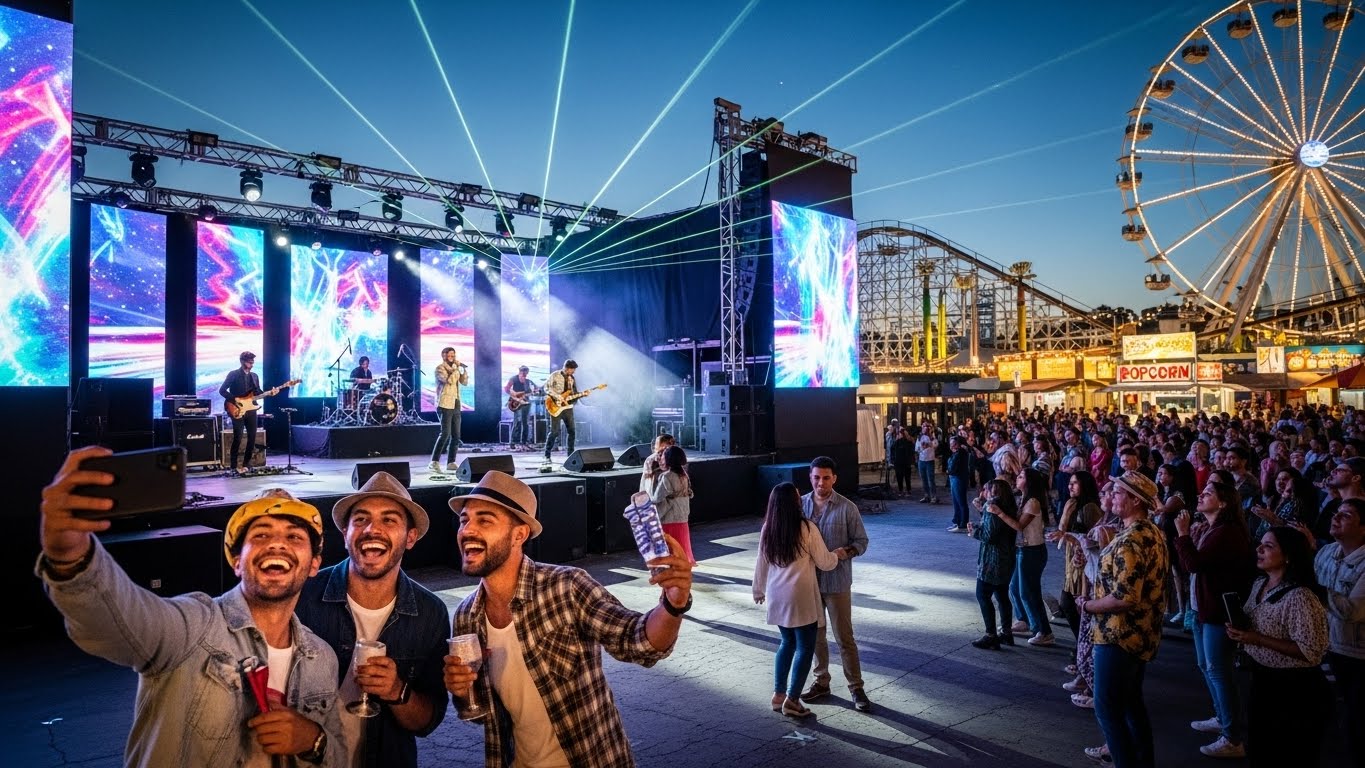
But beyond trends and charts, music’s power lies in how it makes us feel. A song can pull us out of sadness, amplify our happiness, or bring us back to a memory long forgotten. For many, music is therapy—it says the words we can’t find ourselves. That’s why concerts and festivals feel so electric: thousands of strangers, united for a few hours, singing the same lyrics as if they share one heartbeat.
Cinema: The Dream Factory
Movies have always held a special place in the entertainment world. They combine every art form—writing, acting, music, photography—into one immersive experience. A great film can make us laugh, cry, or rethink our lives entirely.
The magic of cinema lies in its ability to transport us. We can journey through galaxies, relive history, or explore futures we may never see. It’s a collective dream we all buy a ticket to enter. Yet, the best movies don’t just entertain; they challenge us. They hold up a mirror and make us see the world from another angle.
In recent years, filmmakers have pushed boundaries like never before. With high-quality cameras available to almost anyone, independent creators have begun to rival big studios. Film festivals and streaming platforms have become gateways for diverse stories from every corner of the world. And audiences are responding—people are hungry for stories that feel real, raw, and human.
Television and the Rise of the Series Era
Television used to be considered cinema’s less sophisticated cousin. That’s no longer the case. The past decade has seen an explosion of high-quality series that rival or even surpass films in storytelling depth. Complex characters, long-form narratives, and cinematic production values have turned TV into a storytelling powerhouse.
From fantasy epics to gritty crime dramas, the best series now shape cultural conversations. They create communities of fans who dissect every detail, debate theories, and share memes online. A great show doesn’t just end with the credits—it continues to live in discussions, fan art, and rewatches.
The way we consume TV has also changed. We no longer gather around the living room at a fixed hour. Instead, we stream on phones, tablets, or laptops, whenever and wherever we want. This flexibility has given audiences more control but also introduced a new challenge: too much choice. In a world where there’s always something new to watch, our attention has become the most valuable currency.
Gaming: The Interactive Revolution
Gaming has evolved far beyond the joystick era. It’s now one of the biggest entertainment industries in the world, surpassing movies and music combined. What makes gaming unique is its interactivity—it doesn’t just tell a story, it lets you live it.
Modern games blur the line between reality and fiction. They feature cinematic visuals, intricate plots, and emotional character arcs that rival Hollywood films. Players aren’t just observers; they’re participants. Every choice, every victory, every defeat becomes personal.
The gaming community is also redefining what entertainment means. Esports tournaments fill stadiums, streamers attract millions of viewers, and virtual worlds become social spaces. For many, gaming isn’t just a hobby—it’s a culture.
The Role of Social Media in Modern Entertainment
Social media has changed everything about how we experience entertainment. It’s not just a platform for sharing opinions—it’s where entertainment is born, spreads, and evolves. Viral videos, short-form content, and memes now compete with traditional media for our attention.
Creators on platforms like TikTok, Instagram, and YouTube have built entire careers without ever stepping into a studio. Their content may last seconds, but their influence can last years. What makes social media entertainment so powerful is its immediacy and relatability. Viewers don’t want polished perfection; they want authenticity.
At the same time, social media has turned audiences into participants. We no longer just consume entertainment—we remix it, parody it, and interact with it. Fans can talk directly to artists, share reactions in real time, and shape trends overnight. Entertainment has become a two-way conversation.
The Psychology Behind Why We Love Entertainment
So, why are we drawn to entertainment in the first place? Science offers some fascinating answers. Entertainment triggers the brain’s reward system. When we watch a movie, laugh at a joke, or hear a favorite song, our brain releases dopamine—the “feel-good” chemical. It’s a natural high that makes us want more.
But there’s more to it than chemistry. Entertainment also fulfills emotional and social needs. It allows us to experience danger safely, to feel empathy for others, and to escape from daily stress. In a way, entertainment is both a mirror and a window—it reflects who we are and shows us worlds beyond our own.
Psychologists also point out that stories help us make sense of life. Through fiction, we process complex emotions and moral dilemmas. A tragic movie might make us cry, but it also helps us understand loss. A comedy might make us laugh, but it also reminds us of our shared humanity.
The Business of Fun
Behind the magic of entertainment lies a massive global industry. Movies, music, gaming, and media generate trillions of dollars every year. But beyond the numbers, it’s a business built on creativity and emotion.
Studios, record labels, and production companies constantly try to predict what audiences will love next. Yet, despite all the data and algorithms, the biggest hits often come from risk-takers—those who dare to try something new. That’s because entertainment isn’t just about supply and demand; it’s about resonance. When something feels genuine, people respond.
The digital revolution has also disrupted traditional business models. Independent artists can now reach audiences directly. A song recorded in a bedroom can go viral overnight. A filmmaker can crowdfund a project without a studio. Technology has democratized entertainment, giving power back to creators and audiences alike.
The Future of Entertainment
The future of entertainment will be even more immersive and interactive. Virtual reality and augmented reality are already transforming how we experience stories. Imagine stepping inside your favorite movie or attending a concert in a digital world. AI-generated music, holographic performances, and personalized streaming are just the beginning.
But as technology advances, one thing remains constant: our need for connection. The tools may change, but the goal is still the same—to move people, to make them feel something real. Entertainment will always evolve, but its essence will never fade.
The Dark Side of Entertainment
Of course, not everything in the entertainment world is glamorous. The pressure to entertain, stay relevant, and attract attention can be overwhelming. The industry often struggles with issues like burnout, exploitation, and unrealistic beauty standards.
Social media has amplified this pressure. Influencers and celebrities live under constant scrutiny, their private lives turned into public spectacles. For audiences, the endless scroll of curated perfection can create feelings of inadequacy or comparison.
That’s why it’s important to remember that entertainment is meant to enrich life, not define it. Enjoying a movie, song, or show should bring joy, not stress. The healthiest way to consume entertainment is with awareness—knowing when to switch off, when to take a break, and when to step back into real life.
The Magic of Shared Moments
Despite all its complexity, the most beautiful thing about entertainment is how it brings people together. Think about a packed movie theater erupting in laughter, a stadium echoing with cheers, or a living room full of friends watching a show finale. These shared moments remind us that, deep down, we all crave connection.
Even in an age of personalization, where everyone has their own playlists and watchlists, entertainment remains one of the few things that unites us. It creates common ground in a divided world. When we laugh, cry, or sing together, we remember that we’re all part of the same story.
Conclusion: More Than Just Fun
Entertainment is far more than a way to pass time. It’s an essential part of what makes us human. It teaches, heals, inspires, and unites. It allows us to dream, to imagine, and to understand one another. Whether through film, music, games, or stories, entertainment continues to shape our culture and our hearts.
So next time you find yourself lost in a movie, humming a song, or staying up late to finish a show, remember—it’s not just entertainment. It’s a celebration of the human spirit, an ever-evolving dance between creativity and connection.